
The Top 5 Modern Facade Trends in Commercial Buildings are reshaping the way architects, developers, and businesses approach building design. Today, a commercial building’s exterior is far more than a protective envelope—it serves as a powerful expression of brand identity, sustainability, and architectural excellence. As the demand for energy-efficient, environmentally responsible, and visually distinctive structures continues to grow, modern facade systems are evolving to combine aesthetics with high performance. From advanced glass curtain walls and ACP cladding to smart, responsive facade technologies, these innovations enhance natural lighting, improve energy efficiency, and create iconic building exteriors. In an increasingly competitive urban landscape, adopting the latest facade trends enables businesses to showcase innovation, strengthen their brand presence, and deliver long-term value through cutting-edge architectural design.
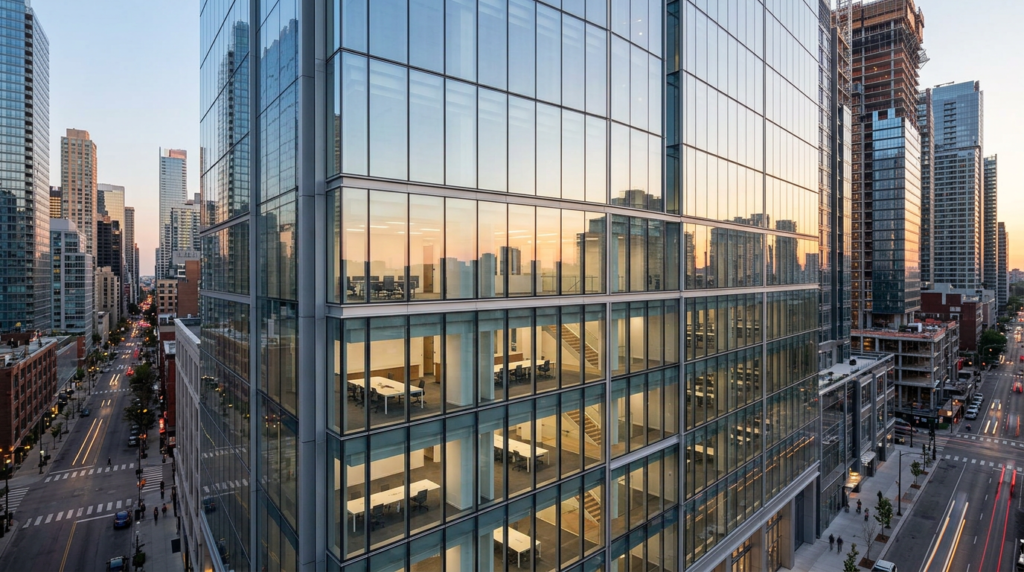
One of the most prominent modern facade trends in commercial buildings is the use of high-performance glass facades. Glass curtain wall systems provide transparency, allow natural daylight to penetrate deep into interiors, and create a seamless connection between indoor and outdoor spaces. Another growing trend is double-skin facades, which feature two layers of glass separated by an air cavity that improves insulation and reduces energy consumption. Alongside this, sustainable facade materials such as aluminum composite panels, terracotta cladding, and recycled metal systems are becoming increasingly popular due to their durability and eco-friendly properties. Designers are also incorporating green facades and vertical gardens, where plants are integrated into the building’s outer structure to improve air quality, regulate temperature, and enhance aesthetics. Additionally, parametric and kinetic facades are redefining modern architecture by introducing dynamic designs that respond to sunlight, temperature, or wind conditions, creating visually interactive and energy-efficient building envelopes.
Trend & Aesthetic Focused
Another emerging trend shaping the future of commercial facade design is the integration of smart technology and energy-efficient systems. Smart facades use sensors and automated shading devices to control sunlight, optimize indoor temperatures, and reduce reliance on artificial cooling systems. This not only improves occupant comfort but also significantly lowers operational energy costs for commercial buildings. LED-integrated facades are also gaining popularity, allowing buildings to display digital lighting patterns or branding elements at night, transforming the structure into a landmark within the cityscape. Moreover, modular facade construction is revolutionizing the building industry by enabling faster installation, improved quality control, and reduced construction waste. As cities continue to evolve, modern facades are becoming a perfect blend of technology, sustainability, and architectural creativity, ensuring that commercial buildings remain efficient, visually compelling, and environmentally responsible. Businesses investing in advanced facade systems are not only enhancing their building’s performance but also strengthening their brand presence in an increasingly design-conscious world.

Modern commercial facade design is evolving rapidly, combining innovation, sustainability, and advanced technology to create buildings that are both visually striking and highly efficient. From glass curtain walls and green facades to smart and kinetic systems, these trends are redefining how commercial buildings interact with their environment. Businesses that invest in modern facade solutions not only enhance their building’s performance but also strengthen their brand image in today’s competitive architectural landscape.